
Intracoastal homes for sale, Fort Lauderdale & Broward
The Intracoastal is the big water, wide, open, always moving. It's the postcard version of waterfront living in Fort Lauderdale. It also comes with wakes, no-wake rules, and one question buyers miss: does the listing actually front the ICW, or a canal a turn or two off it? Here's how to tell.
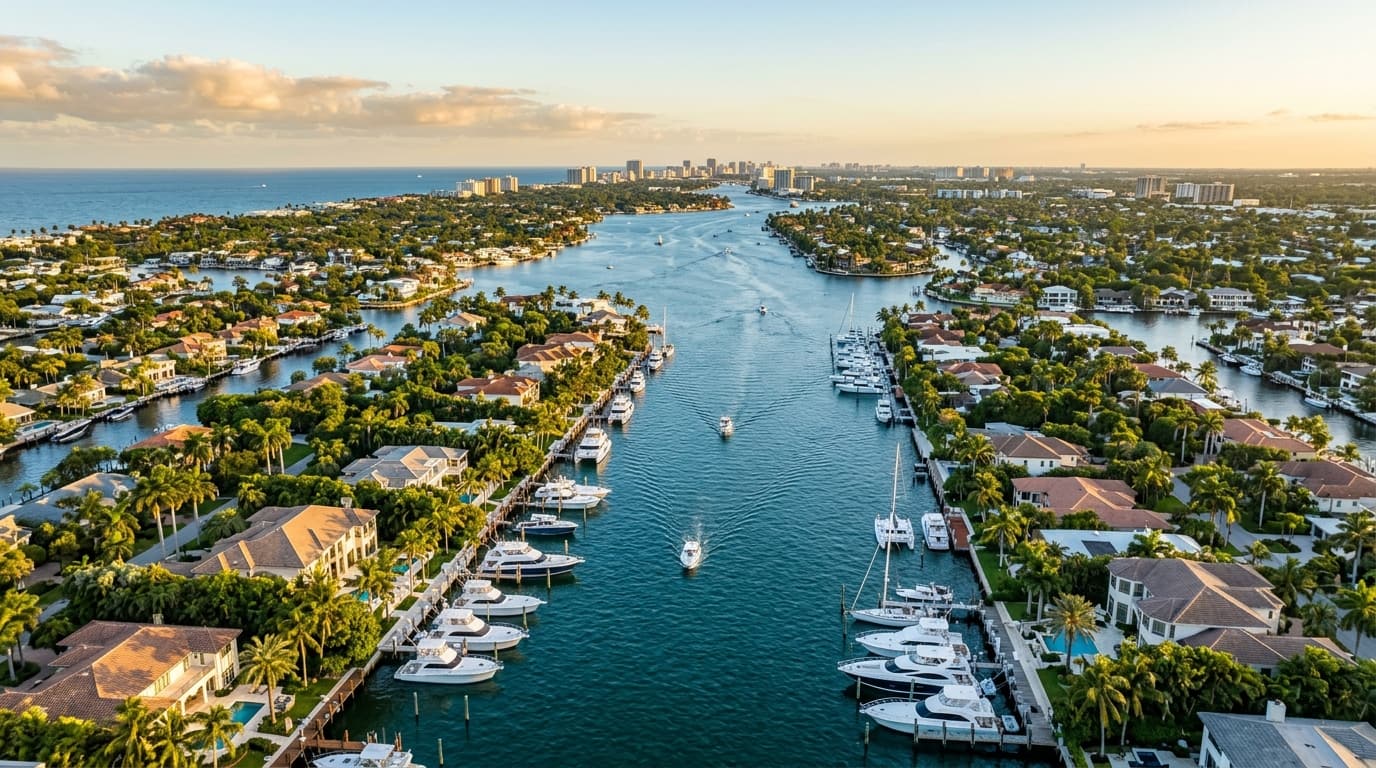
Living on the Intracoastal means living on the main stage, the widest water, the biggest views, and the parade of boats that makes Fort Lauderdale feel like Fort Lauderdale. The ICW is a roughly 3,000-mile inland waterway along the Atlantic and Gulf coasts, and through this stretch it is the main north-south "big water" channel, distinct from the residential finger canals that branch off it. For a lot of buyers, that open-water energy is exactly the point.
The channel here is genuinely deep, the federal navigation channel through the Broward stretch is maintained to an authorized project depth of about 10 to 12 ft, so homes fronting the ICW typically sit on real, navigable water. The corridor is also lined with marinas and yacht facilities, and the city hosts one of the world's largest boat shows, so large-vessel dockage, service, fuel, and provisioning are close at hand.
What makes ICW frontage its own thing
Intracoastal frontage is a specific kind of waterfront, and a few facts define it:
- Wide-water views, an ICW-front lot faces the main waterway, with more light, more breeze, and open sightlines a narrow canal lot simply doesn't have.
- Point lots, where the ICW meets a canal or the waterway bends, you get the widest and longest water views; these are among the most sought-after and highest-priced positions on the water.
- Western exposure, west-facing ICW docks are prized for open sunset views straight across the water.
- Deep, navigable water, the maintained channel depth means big boats belong here, and marinas and service are minutes away.
- Two ways in, you can get ICW frontage as a single-family homeowner or as a condo owner with a deeded boat slip.
All of it sits on saltwater or brackish, tidal water, the same salinity that supports the marine life also drives seawall and metal-hardware corrosion, which is why the seawall cap and dock fixtures matter on every ICW inspection.
The honest trade-off nobody markets
Here is the thing listings leave out. Real ICW frontage means real wakes and real traffic. The Intracoastal carries constant recreational and commercial vessels, and much of the residential corridor is a designated idle-speed, no-wake, or slow-speed manatee zone, which owners rely on precisely to limit the seawall wear that constant wake would otherwise cause. The wide-water lifestyle and the boat traffic are the same coin.
That naming gap is where buyers overpay. A true ICW-front lot faces the wide main waterway; a "canal" lot sits on a narrower dredged branch off it, and true ICW frontage usually commands a premium the branch-canal home shouldn't. Before you pay for the wide water, I confirm the home actually fronts it, so you're buying the water you think you're buying.
What I verify before you offer
For every Intracoastal home you're serious about, I confirm four things before we talk price:
- True frontage, whether the lot fronts the main ICW or a branch canal, so the premium matches the water.
- Depth at your seawall, the Army Corps maintains the channel to about 10 to 12 ft, but the depth in the slip at a private seawall is the owner's responsibility and gets sounded before purchase.
- The route to the inlet, whether any fixed bridge sits between the dock and Port Everglades, so large-vessel access is confirmed, not assumed.
- Seawall and hardware, cap condition and dock fixtures against saltwater corrosion, with a real flood-zone and insurance picture inside your inspection period.
New to the vocabulary? Start with ocean access vs. Intracoastal and fixed bridges explained.
Where to find these homes
Intracoastal frontage runs the length of the Broward coast, and the water shifts character city to city. Strong places to look:
- Fort Lauderdale, the flagship ICW corridor, lined with marinas, yacht service, and the deepest inventory.
- Pompano Beach, ICW and canal frontage at a more accessible entry point, just north.
- Lighthouse Point, deep-water canals branching off the waterway with fast inlet access.
- Deerfield Beach, The Cove and Intracoastal-adjacent water at the north end of Broward.
- Homes with a boat dock, if the dock and depth matter more than the wide-water label.
Tell me how you'll use the water, the views, the boating, both, and I'll shortlist the frontage that actually fits.
Selling an Intracoastal home
If you own on the wide water, the frontage is the story, and it has to be sold as true ICW frontage, with the views, the depth, and the run to the inlet documented, not implied. See how I market luxury waterfront homes, with media that shows a buyer exactly what the big water and the dockage deliver, in English o en español.
Intracoastal questions
What is an Intracoastal home?
An Intracoastal home fronts the Intracoastal Waterway (ICW), the roughly 3,000-mile inland channel that runs parallel to the coast. Through Fort Lauderdale it is the main north-south 'big water', wide-open views, more light and breeze, passing boat traffic, and a typically easy run toward the Port Everglades Inlet. It's a different feel from a quiet interior canal: bigger water, more activity.
Is the Florida Intracoastal Waterway saltwater?
Largely, yes. Some sections of the waterway are natural inlets, saltwater rivers, bays, and sounds, while others are dredged artificial canals, so it is partly natural, partly man-made. Through the Fort Lauderdale stretch it is saltwater or brackish and tidal, which is why ICW-front inspections should always include the seawall cap and dock hardware for corrosion.
Is Intracoastal frontage better than a canal?
Neither is universally better, it is a lifestyle choice, and true ICW frontage usually commands a premium. An ICW-front lot faces the wide main waterway with big-water views, more light, and open sightlines a narrow canal cannot match. The honest trade-off is wakes and traffic: the ICW carries constant vessel traffic. A branch canal is calmer and more private but sits off the main water. I weigh both against how you will actually use the water.
Can you swim in the Intracoastal Waterway in Florida?
It is a working navigation channel with real boat traffic and current, so it carries safety considerations that a pool or beach does not. Much of the residential corridor is a designated idle-speed or no-wake manatee zone, which owners rely on to limit seawall wear, but the water is still a busy waterway. It is a boating environment first, I am always straight about that when a buyer pictures the lifestyle.
Does an Intracoastal home have ocean access?
Usually the run is easy, ICW-front homes generally offer a straight shot to the Port Everglades Inlet, but "on the Intracoastal" is not a guarantee of large-vessel access. You still confirm whether any fixed bridge sits between the dock and the inlet, and you sound the depth in the slip at your own seawall, because the Army Corps maintains the main channel to about 10 to 12 ft but not the water right at your dock. I verify both before you assume the boat can leave.
Want the big-water lifestyle?
Tell me what draws you to the Intracoastal, the wide-water views, the boating, both. I'll separate true ICW frontage from branch-canal frontage and match you to water that fits, with the access verified.