
 Active
$300,000
7915 Camino Real Apt N416, Miami, FL 33143
Listed by LoKation
Active
$300,000
7915 Camino Real Apt N416, Miami, FL 33143
Listed by LoKation
Areas · Miami-Dade County
Homes for Sale in Miami, FL
A buyer-first read on the neighborhoods, plus how to buy remotely or from abroad. Want the local truth on which building or block actually fits you?
Calls returned within 1 hour. Texts, usually minutes.
Listings
Homes for sale in Miami right now
Active
$300,000
7915 Camino Real Apt N416, Miami, FL 33143
Listed by LoKation
 ActiveWaterfront
$900,000
495 Brickell Avenue # 811, Miami, FL 33131
Listed by United Realty Group Inc
ActiveWaterfront
$900,000
495 Brickell Avenue # 811, Miami, FL 33131
Listed by United Realty Group Inc
 Active
$550,000
16279 SW 56th Terrace # 16279, Miami, FL 33193
Listed by Keller Williams Legacy
Active
$550,000
16279 SW 56th Terrace # 16279, Miami, FL 33193
Listed by Keller Williams Legacy
 Active
$415,000
60 SW 13TH Street # 1418, Miami, FL 33130
Listed by Real Broker LLC
Active
$415,000
60 SW 13TH Street # 1418, Miami, FL 33130
Listed by Real Broker LLC
 Active
$599,000
225 N MIAMI Avenue # 2207, Miami, FL 33128
Listed by Linart Realty, LLC
Active
$599,000
225 N MIAMI Avenue # 2207, Miami, FL 33128
Listed by Linart Realty, LLC
 ActiveWaterfront
$9,500,000
1290 NE 83rd Street, Miami, FL 33138
Listed by Coldwell Banker Realty
ActiveWaterfront
$9,500,000
1290 NE 83rd Street, Miami, FL 33138
Listed by Coldwell Banker Realty
Copyright Southeast Florida MLS a/k/a SEFMLS © 2026. Accuracy of listing information is not guaranteed. Listing information is provided for personal consumer, non-commercial use, solely to identify potential properties for potential purchase. All other use is strictly prohibited and may be a violation of federal and state law. MLS data is deemed reliable but is not guaranteed accurate by MIAMI REALTORS®.
Miami at a glance
Median sale price
$630K
Price per sq ft, year over year
+5.0% YoY
Average days on market
~75
75 days
Data as of mid-2026
The feel
Buying in Miami: one city, a dozen different lives
Miami is not one market. It is a stack of neighborhoods that barely resemble each other, and the version of the city you get depends entirely on which block you pick.
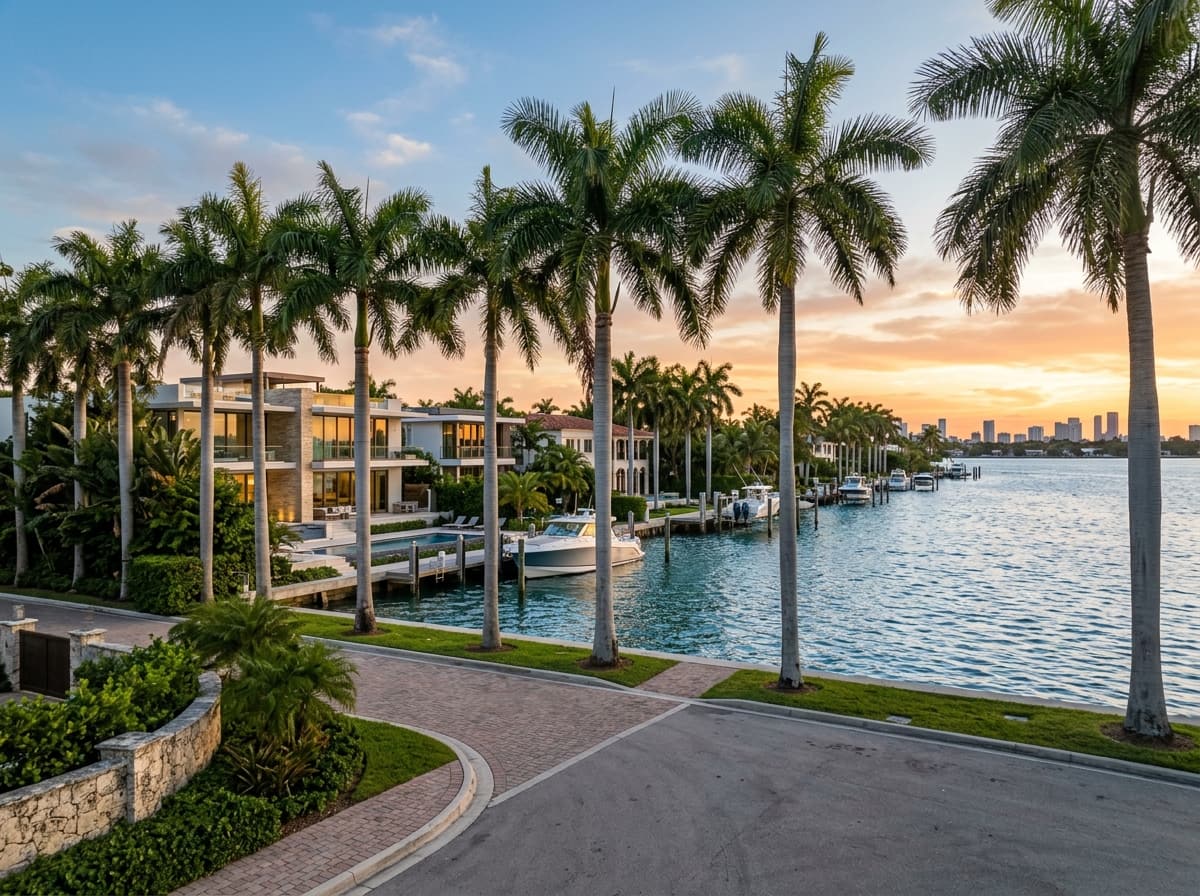
Head to Brickell or Edgewater and Miami is vertical: glass towers, rooftop pools, and the bay a short walk away. Cross into Coconut Grove or Coral Gables and it goes low and green, with 1920s homes, banyan trees, and lots you can actually plant a garden on. Little Havana keeps its own rhythm entirely, low-rise and walkable, with a rich cultural character that is simply a fact of the place.
That range is the whole point. A first home in Miami might be a compact Edgewater condo or a fixer in the Grove, and the buying process for each is genuinely different. Condos come with a building and an association. Single-family homes come with a roof, a yard, and no monthly dues to vet. I make sure you know which kind of purchase you are actually signing up for before you fall for a photo.
Getting around shapes daily life more than people expect. The Metromover loops the urban core for free, Brickell and Downtown are genuinely walkable, and the Grove and the Gables lean on a car. If a short commute or a car-free week matters to you, that alone narrows the map fast.
One honest note on price: Miami reads expensive at a glance, and the waterfront towers earn that reputation. But there are calmer pockets and older buildings where the numbers make sense. The trick is knowing which building carries a healthy reserve and which one is one inspection away from a big bill. More on that below, because it is the part that separates a good buy from a regret.
Where exactly
The neighborhoods, in plain language
Here is the quick lay of the land, the way I would explain it on a first call.
Brickell is the walkable financial core: high-rise condos, Brickell City Centre for shopping and dining, and the bay a few blocks east. Edgewater sits just north along the water with newer towers and easy reach to the Design District. Coconut Grove is the old sailing village, all tree canopy and waterfront, with landmarks like Vizcaya and CocoWalk. Coral Gables brings Mediterranean-style estates, Miracle Mile, and some of the largest lots close to the core. Little Havana holds low-rise character and cultural roots near downtown, and the Design District pairs art and dining with a small, design-forward condo pocket.
The number that decides your experience here is rarely the list price. In a condo it is the building's financial health. On a single-family lot it is age, elevation, and flood zone. I read the right document for the right property type, every time.
BrickellWalkable high-rise core, near the bayCondos Coconut GroveTree canopy, older homes, waterfrontHistoric Coral GablesMediterranean estates, Miracle MileEstates EdgewaterNewer bayfront towers, close to Design DistrictNew build Little HavanaLow-rise, cultural core near downtownCharacter Design DistrictArt, dining, and a small condo pocketUrban
Buying from anywhere
How to buy in Miami remotely, or from another country
A big share of Miami buyers are not in Miami when they start. They are in New York, in São Paulo, in Bogotá, or in Madrid, and they close on a home they toured through a phone screen. It works, and it works cleanly, when the process is set up right.
You can tour without flying in. I walk properties on video, open every closet, and answer the questions a glossy listing photo hides. I will also tell you when a place is worth a plane ticket and when it is not.
You can sign and close from a distance. Florida allows electronic signatures, remote online notarization in many cases, and a power of attorney when that fits your situation better. Many international purchases are cash, which removes the financing timeline entirely. If you do need a loan, foreign national mortgage programs exist, and I can point you to lenders who handle them.
Protect the wire. This is the one place I get loud. Wire fraud targets exactly this kind of buyer. Always confirm wiring instructions by calling a known number at the title company, never a number from an email, before you send funds. I will say this to you more than once, and I will not apologize for it.
Line up your own team. A foreign buyer usually wants a tax advisor familiar with US property and, if applicable, an immigration attorney. My lane is the home and the local market. I coordinate the pieces so a remote deal does not feel like you are flying blind.
Many of my buyers are relocating from abroad, and they still need a place to live once they land. I guide the home search, separate from any immigration or investment matters, which belong with an immigration attorney and the right financial professionals, entirely in Spanish or English. Prefer Spanish? Empieza con casas en venta en Miami.
The overlooked Miami
Condo reserves and assessments: the detail that makes or breaks a Miami buy
Here is the thing almost no listing spells out, and the thing that decides whether a Miami condo works for you.
Florida rewrote the condo rulebook. After the 2021 Surfside collapse, the state required buildings three stories and taller to complete milestone structural inspections and to fully fund their reserves. Associations that kept dues artificially low for years are now catching up, and the cost lands on owners as higher monthly fees or a special assessment. Two identical units in two different towers can carry very different bills.
The documents tell the real story. Before you offer, I pull the reserve study, the milestone inspection status, the association's budget, and the special-assessment history. A building with a funded reserve and a clean inspection is a very different purchase from one facing a pending assessment, even if the units look the same online.
Single-family is a different checklist. No monthly dues, but roof age, elevation, flood zone, and insurance cost move to the front. Miami's zoning runs on a form-based code called Miami 21, which shapes what can be built next door, and that matters more than buyers expect in a fast-changing city.
None of this shows up in a search filter. All of it rewards a local who reads the paperwork. That is the edge here, in practice.
Right now
The Miami market right now
Here is the honest read, as of mid-2026.
Median sale price sits near $630K, with price per square foot +5.0% YoY. Homes average about 75 days on market. Those are city-wide numbers, and Miami hides more variation behind an average than almost anywhere: a Brickell tower and a Grove cottage barely share a market.
What that means in practice: a well-priced home moves, so as a buyer you want your financing or proof of funds ready before you tour, not after. The bigger variable is not the headline number. It is the specific building or block, and its reserves, its flood zone, and its rules. I will tell you which side of that line your target sits on.
Shopping at the top of the market? Luxury homes in Miami separates the bayfront lots from the tower residences, with the live count and the highest asking price from the MLS feed.
Comparing value nearby? Hollywood sits just north in Broward, with a walkable beach and lower entry pricing than most of the Miami core. If you are weighing city energy against a quieter suburb, that is worth a look before you commit.
The local edge
What a local agent actually gets you here
Any agent can send you Miami listings. Fewer will read the reserve study, flag the tower with the pending assessment, and coordinate a clean remote closing so you can buy from another time zone with your eyes open.
That is the difference between buying a floor plan and buying a life here. Ready to start? The buyer page lays out how I run a search in a fast market, and if the whole move is on the table, that is the relocation conversation, planned around your calendar so nothing gets rushed.
A note on the EB-5 mention above. Please read this part.
Any reference to EB-5 on this page is educational content only. Nothing here is legal, tax, immigration, or investment advice, and nothing here is an offer or solicitation of securities.
Mary Gallo is a licensed Florida real estate agent. She is not a broker-dealer, not an investment adviser, and not an immigration attorney. She does not recommend, endorse, or sell any EB-5 project, regional center, or offering.
All figures, dates, and program details referenced are as of publication and can change. Before making any immigration or investment decision, consult licensed professionals: an immigration attorney, a registered broker-dealer, and a tax advisor.
FAQ
What people ask about buying in Miami.
How much is a home in Miami?
The median sale sits near $630K as of mid-2026, with price per square foot +5.0% YoY. Condos run the full range, from compact Edgewater units to high-floor Brickell towers, and single-family homes in Coconut Grove and Coral Gables sit well above the median. Tell me your budget and I will show you what is real today.
Can I buy a home in Miami from abroad or another state?
Yes, and a large share of Miami buyers do exactly that. You can tour by video, sign electronically or through a power of attorney, and close by wire without ever sitting at a table in person. The two things I insist on: verify wiring instructions by phone before you send a cent, and get your team, meaning a title company and, if you are a foreign national, a tax advisor, lined up early. I coordinate the local pieces so a remote purchase does not feel remote.
Why do Miami condos have such different fees and assessments?
Because Florida changed the rules after Surfside. Condo buildings three stories and taller now face milestone structural inspections and mandatory reserve studies, so associations that underfunded for years are catching up all at once. That shows up as higher monthly dues or a special assessment. I pull the reserve study, the milestone inspection status, and the assessment history before you write an offer, because a low fee today can become a five-figure bill next year.
Which Miami neighborhood should I look at first?
It depends on what you want from a day here. Brickell and Edgewater are walkable, tower-heavy, and close to the water. Coconut Grove and Coral Gables trade that density for tree canopy, older homes, and bigger lots. Little Havana keeps its low-rise, culturally rich character close to downtown. I match the shortlist to how you actually want to live, then read the building or HOA docs with you.
Let’s talk
Want the neighborhood-by-neighborhood truth on Miami?
Text me the area or building you're eyeing. I'll tell you what the listing and the HOA docs won't say out loud.
On the map
Explore Miami, FL
Serving all of Miami and the surrounding southwest Broward area. See a pocket you like? Text me.